
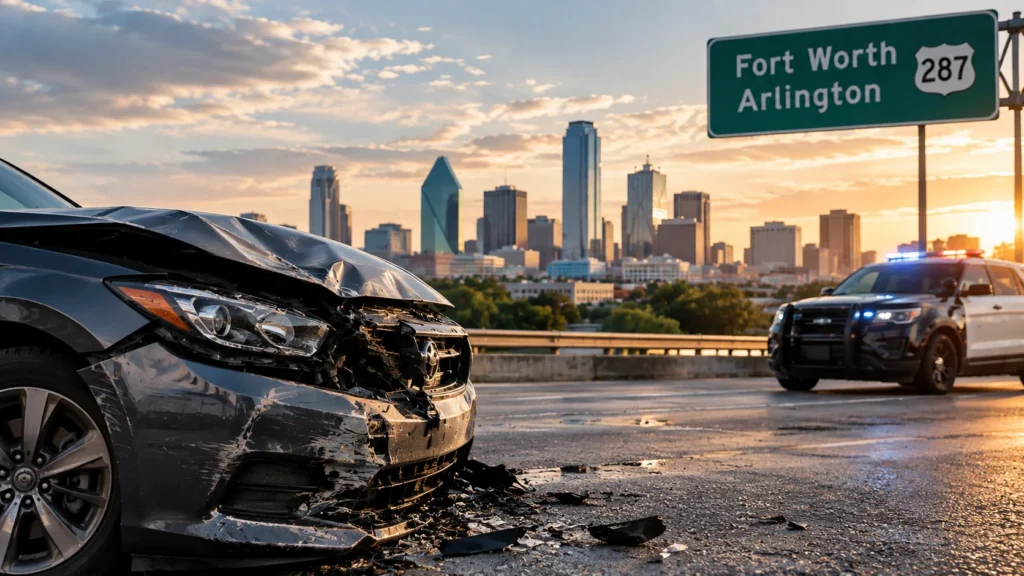
If your crash happened in Fort Worth, Arlington, Richland Hills or any other city in Tarrant County, the Texas law that applies is the same as in Dallas. What changes is everything around it: which agency wrote the report, where you obtain it, which hospitals hold the records, and which court handles the matter if a suit is filed. Knowing which county you are standing in saves weeks.
Who investigated my crash?
That depends on where the accident happened and which law enforcement agency responded. Tarrant County includes multiple municipal police departments, along with other state and local law enforcement agencies.
The responding agency should be identified on the information provided at the scene or on the crash report. If possible, keep the officer’s name, agency, report or incident number, and any other information you receive after the accident.
Knowing which agency investigated the crash can make it easier to locate additional records or information that may be relevant to the claim.
How do I get the crash report?
Texas traffic crash reports are recorded on the CR-3 form and can be requested either from the agency that produced them or through the Texas Department of Transportation’s online crash report purchase system. The document takes a few days to become available after the crash.
Once you receive the report, review it carefully. If you notice information that appears inaccurate or incomplete, keep any photographs, witness information, insurance documents, or other records that may help clarify what occurred.
Does it matter if the crash was on I-30, the 820 or the 183?
The basic negligence principles do not necessarily change simply because an accident happens on a highway rather than a city street. However, the circumstances surrounding a highway crash can affect how the claim is investigated. Highway accidents may involve multiple vehicles, higher speeds, commercial vehicles, or more complicated questions about how the collision occurred. The responding law enforcement agency, available video, roadway evidence, witness locations, and other factors may also vary depending on where the accident happened.
If a commercial truck is involved, additional evidence and federal safety regulations may become relevant. We discuss those issues further in our article on 18-wheeler accident claims in Texas.
Do I need an attorney with an office in the county?
It is not a legal requirement. It is a practical advantage. Having the firm nearby means meetings without crossing the metroplex, which after an injury is not a small thing, and it means a team used to working with the local agencies, medical providers and courts.
The Law Offices of John R. Salazar keeps a full office at 7912 Glenview Drive in Richland Hills, reachable at (817) 589-0443, alongside the downtown Dallas office. It serves Fort Worth, Arlington, the Mid-Cities and the surrounding Tarrant County communities. You can see the details on our Tarrant County office page. Both offices handle the same range of cases with the same team behind them, and the consultation is free at either location.
What should you do in the first few days?
- Seek medical attention even if the pain seems mild, and keep every record from the first visit onward.
- Photograph the vehicles, the scene, the signage and any visible injuries before anything is moved or repaired.
- Note which agency responded and ask for the report number.
- Locate cameras on nearby businesses: many record on a loop and overwrite within days.
- Do not give a recorded statement to the other side’s insurer before you know where you stand.
- Do not accept a quick offer without knowing whether it covers future medical costs and not just immediate expenses.
Let's talk about your case
If you were injured in a crash in Tarrant County, The Law Offices of John R. Salazar has represented injured people across North Texas since 1990, assists clients in English and Spanish, and the consultation on your case is absolutely free. You can request your free consultation or read how we handle car accident claims.
Frequently Asked Questions
It depends on several factors, among them where the incident occurred and where the party being sued resides. It is one of the first questions settled when a case is analyzed, and it does not have to match the county where you live.
Yes. Both offices belong to the same firm, so you can meet at whichever location is easier for you, regardless of where the accident happened.
In Texas the general deadline to file a personal injury lawsuit is two years from the date of the accident. That clock runs from day one, so the sooner the evidence is gathered, the better.